
The good smell of wood brings my mind to the mountains and for a moment I am enchanted. Marta Lucchi is talking to a girl. Among them is a bow for the violin. I turn my eyes around the room and am fascinated by bunches of horsehair hanging under a neat row of arches, which are put on display, behind a cello. In a corner, a double bass waits lazily. As my thoughts fly away, Marta calls me back to reality, with her smile and her kind welcome.
Let’s go to see the school.
Between Emporio Lucchi, in via Monteverdi 18, and Palazzo Mina-Bolzesi, home of the Cremonensis Academy, there are only a few steps. Marta started telling me about her father: studies at the Conservatory, the double bass, the work in the Theater in Bologna, the teaching, the transfer to Cremona of the family …
We are five brothers. The first, Massimo, was born in Verona. I was born here in Cremona. It was often difficult for my mother to be able to do everything by herself: she had no relatives to rely on, and her dad was always busy with work and teaching. He liked a lot to teach because he liked to share with others what he had learned and was always curious to learn from others. Then, just before my father died, the professional course for bow-makers, which had been entrusted to him in 1976, was closed and, for my father, it was a cause of great suffering … so after his death, we brothers, collected the legacy of his dream, and we opened the Academia Cremonensis to keep his school alive.
We enter Palazzo Mina-Bolzesi, a beautiful example of neoclassical architecture. On the right, we saw the access to the school. A young man grappling with a cello is welcoming us. So there are not only courses for bow-makers?
In fact, the school for bow makers is our most specific sector: here we teach in particular the Lucchi method, which is the method developed by my father for the construction of arches. But we also have a course for luthiers.
On the ground floor a course and another on the first floor?
No. Spaces are exploited in a very flexible way, adapting them to the needs of the moment. On the ground floor, we have a larger space, where we usually welcome school children eager to discover the secrets of a bow but, when we need it, we put work tables here too.
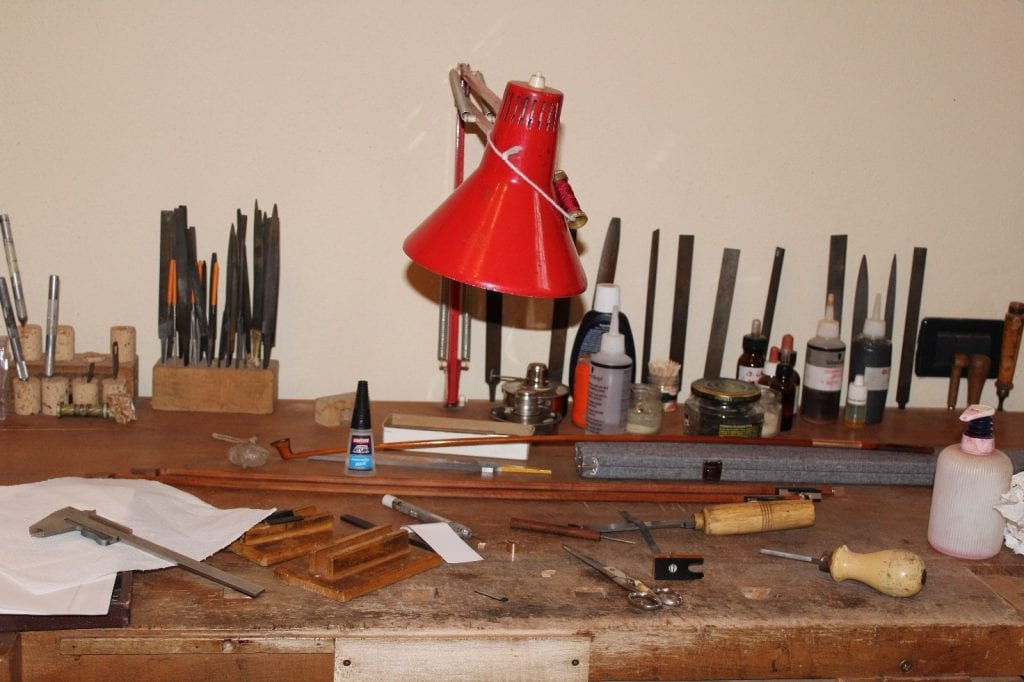
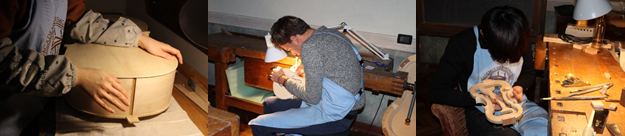
On the first floor, in absolute silence, the students are all intent on their work. Everyone has his own table, but why are they all doing different things?
The students who follow our courses come from all parts of the world, at different times of the year. The course offered by the Academy is a two-year course, but each student starts it whenever he wants, and then an individualized path is built for him that takes into account his aspirations and his starting level. Some of the students start from scratch and start the course by building their work tools. Others come with a luthier experience behind them. There are even those who already know how to build bows, but want to learn how to do it with the Lucchi method. All work side by side, followed by the teacher who suggests, advises, and checks. There are those who want to learn how to make bows of all kinds and who, a priori, has already decided that he does not want to learn how to build bows for double bass. One of the students who are now following the courses has decided that his goal is to build a quintet of bows: two for violin, one for viola, one for cello, and one for double bass. And it is at a good point.
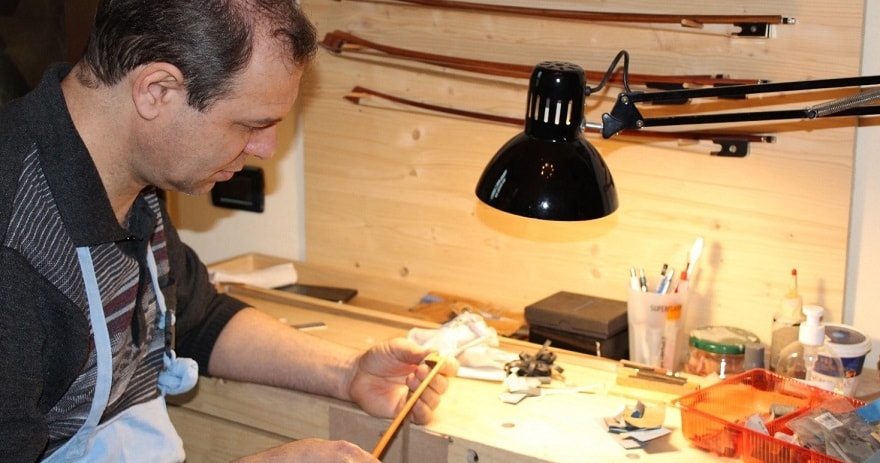
From the light of the rooms where the bow-makers are at work, we pass in the dark of the rooms where the luthiers are at work. Here too there is absolute silence. A shy girl caresses the wood of the cello she is building, a boy is already intent on finishing a violin, while another is using the shape yet. But these guys, who come from all over the world, are able to communicate with each other?
Maybe at the beginning, when they’ve just arrived, they have some difficulties, but then they learn Italian quickly enough. The guys here in Academia, when they do not have any particular work to finish, are busy only in the morning and therefore have all the time, in the afternoon, to take courses in Italian, and they usually learn it willingly. Moreover, to learn the right movement of the hands on the wood, perhaps the eyes are more useful than the words.
Let’s return to the light in the area of bow makers. The students came out for a break and I took the opportunity to ask Marta more questions. How do you get the right curvature of an arch and how is it made so shiny?
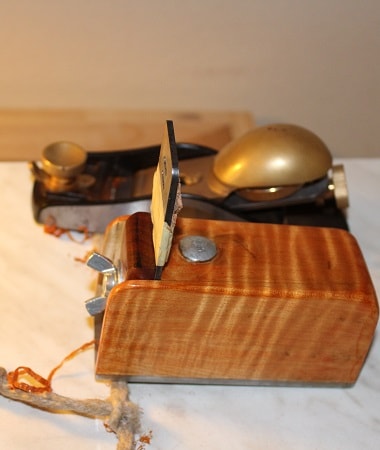
To bend the bow you use a jet of hot air that, obviously, must be positioned at the right point of the rod. To prevent the wood from drying too much, it is necessary to protect it. Just as, when the bow is ready, the wood is protected by polishing it with the shellac, because the paint would reduce the elasticity of the wood and therefore the quality of the arch. Shellac not only protects the wood but highlights the different shades. Even the horse hairs, used naturally, as my father loved to do, have always different shades of color and help to make each bow unique.
Coming out we pass by a cozy room, where a piano in the semi-darkness seems to wait for the moment to be able to merge its voice to the voice of the instruments that are borning in the dark and in the light of the rooms next.
There is no doubt: here time runs at another speed.
A site to quickly and effectively find everything a cellist asks on the web